
Introduction – Embedded Systems
Embedded systems is a rapidly growing industry, creating countless new opportunities. Though it may seem difficult when approached as forced or uninspiring education, the subject itself is truly fascinating. When learned with curiosity and enjoyment, embedded systems becomes not only easy, but exciting.
Embedded systems for beginners
In this program, we explain embedded systems through a structured, step-by-step learning approach. We begin with the fundamentals of electronics, move on to hobby circuits and digital electronics, and then progress into embedded systems. Throughout the journey, we focus on essential concepts and key practical content. This is how we guide learners to understand and master these exciting and powerful technologies.
Basic electrical : Current, Voltage, Power
Current and voltage are fundamental concepts in electronics and are easy to understand when explained correctly. In this section, we use simple and practical experiments to clearly demonstrate what current, voltage, and power really mean. These hands-on activities help connect theory with real-world behavior, making the concepts intuitive and memorable. With this foundation, learners gain confidence and a strong understanding of core electrical principles.
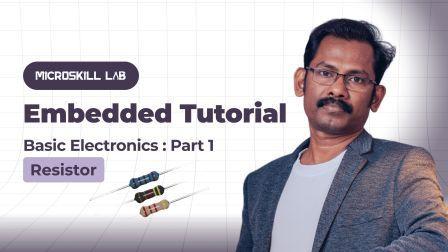
Basic electronics : Part 1 - Resistor
Understanding electronics is a logical and essential first step toward learning embedded systems development. In this section, we explain the six basic types of electronic components and how electronics can be understood through them. Each component is taught using a simple, engaging, and fascinating learning approach. For example, a resistor can be easily made and tested using materials from everyday life. Through such practical experiments, we introduce learners to electronics with strong fundamentals and take the first confident steps toward mastering the subject.
Basic electronics : Part 2 - Capacitor
A capacitor is another fundamental component that can be understood quickly and easily. Using simple, everyday materials, we can even build one ourselves. Through an easy and hands-on experiment, we explain what a capacitor is, how it is made, and how it works.
Basic electronics : Part 3 - Transistor
The transistor is one of the most important components in electronics. Its invention marked a major milestone in the history of science and technology. Here, we explain the basic working of a transistor in a simple and easy-to-understand manner, making it an excellent starting point for your journey into electronics.
Basic electronics : Part 4 - Inductor, IC chip and Diode
An inductor can be a little challenging to understand at first, but here we approach the concept in a simple and intuitive way. Diodes, on the other hand, are easy to grasp, yet they offer a wide scope for creative circuits and practical applications in electronics. In this section, we clearly explain what an inductor is, introduce the basics of IC chips, and explore the working of a diode. Together, these topics help learners connect core concepts with real-world electronic designs.
Basic eletricals : Rectifier
During an engineering degree, we come across many terms such as inverter, converter, rectifier, and more. Often, these words create confusion rather than clarity. Here, we simplify these concepts by clearly explaining what each one means and how they differ. Through small, hands-on experiments using simple components like motors, power supplies, and diodes, we help learners understand complex systems by exploring them through simple and practical demonstrations.
Embedded Systems Career Guide | From Learning to Landing Your First Job
Embedded systems is not just about blinking LEDs or writing code—it’s about building the right mindset, skills, and learning path to become industry-ready.
In this session, we present a complete career roadmap for embedded systems, designed especially for students, beginners, and self-learners who are confused about where to start and how to move forward.
You will learn how to study embedded systems effectively, what fundamentals really matter, and how to progress step-by-step from basics to job-oriented skills. This session connects academic learning with real industry expectations and helps you avoid common mistakes made by beginners.
Rather than focusing on tools alone, we focus on:
Understanding concepts deeply
Building strong fundamentals in electronics and C programming
Developing problem-solving and debugging skills
Choosing the right type of projects
Preparing yourself for your first job or internship in embedded systems
Whether you are just starting your journey or already learning embedded systems but feeling lost, this guide will help you gain clarity, confidence, and direction.
Embedded systems is not difficult — it only needs the right approach.
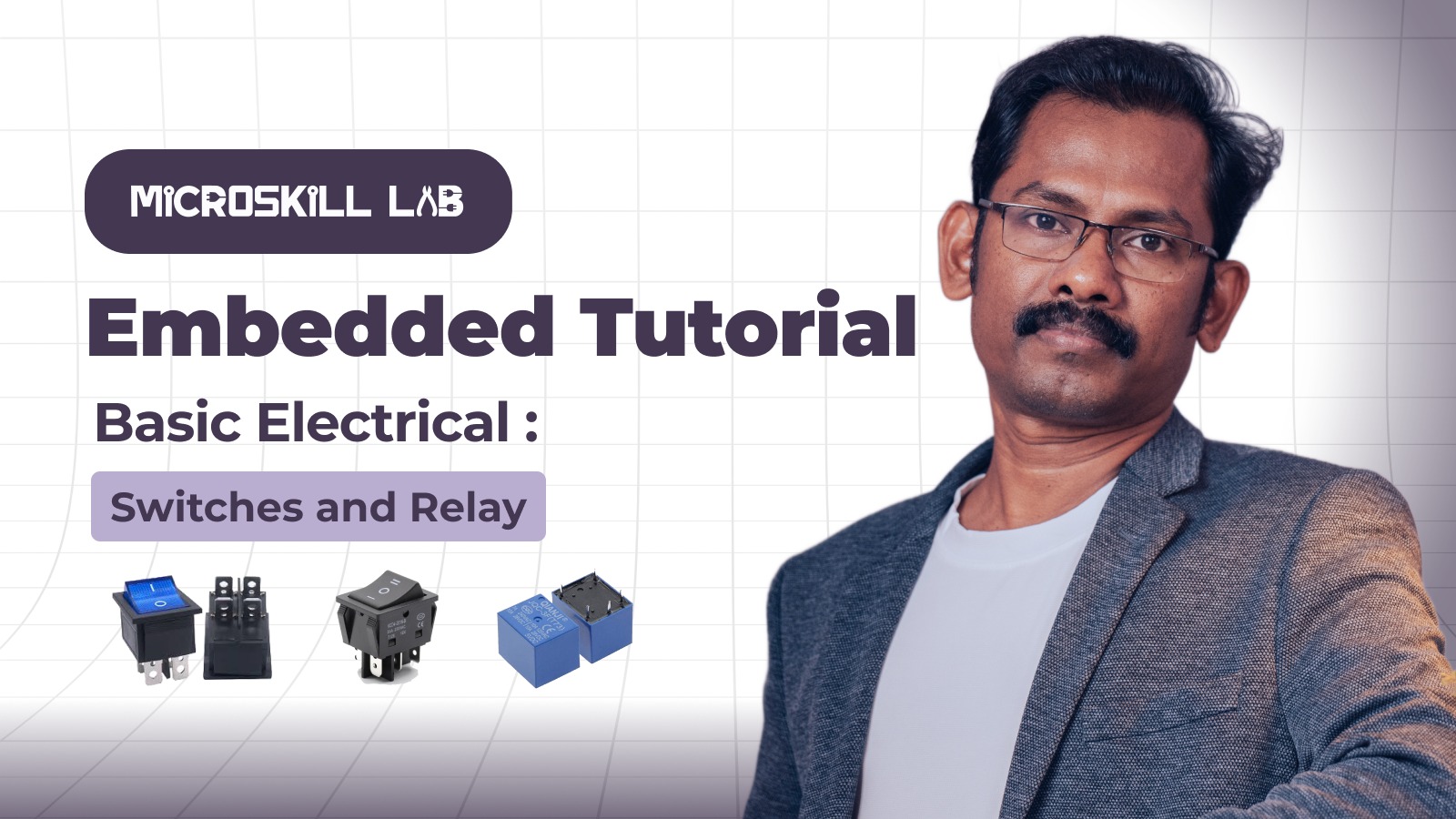
Switches & Relays Made Simple | Types, Internal Parts & Working Explained
We explain Switches and Relays in a clear and beginner-friendly way as part of our Embedded Tutorial – Basic Electrical series.
Many learners get confused by switch types like SPST, SPDT, DPST, and DPDT, and also about how a relay actually works internally.
In this session, we simplify these concepts using real components and practical explanations.
🔹 Topics covered in this video:
• What electrical switches are
• Types of switches: SPST, SPDT, DPST, DPDT
• Practical use of each switch type
• What a relay is and why it is used
• Internal parts of a relay (coil, contacts, armature)
• How a relay works step by step
• Difference between switches and relays
• Real-world and embedded system applications
This video is ideal for engineering students, beginners in electronics, and anyone learning embedded systems.
Simple Door Alarm | Learn Electronics Practically
We introduce Hobby Circuits as a powerful and fun way to learn basic electronics.
Instead of memorizing theory, we learn by building simple, practical circuits.
As a first hobby circuit, we design a simple door alarm using a reed switch, relay, and buzzer. When the door opens, the circuit triggers a “beep beep” alarm, helping you understand switching, control, and real-world applications.
This video is perfect for beginners, students, and electronics enthusiasts who want to learn electronics the right way—by doing.
Components Used:
8pin 5v relay, 10mm buzzer, capacitor1- 470uf 25V, capacitor2 - 100uf 25V, connecting wire(single stand), limit switch, reed switch, magnets.
Tools Used:
soldering iron
Other Materials Used:
solder, battery, battery holder(4-cell).
Basic Electronics Practice | UM66 Music Circuit on Dot Board
We build a simple music circuit using the UM66 IC on a dot board (PCB).
This project is intended to help beginners become confident in basic electronics through hands-on circuit building. Instead of focusing only on theory, the video emphasizes practical skills such as understanding circuit flow, correct connections, and neat dot board implementation.
By working on this project, learners develop a strong foundation in basic electronics, which is essential before moving on to advanced topics like embedded systems.
This video is part of our basic electronics learning path, designed for students and beginners who want to build real skills through simple, practical circuits.
Components Used:
IC UM66, transistor BC547, resistor 1K 1/4 W, speaker - 8 Ohms 1/2W, dot board PCB, 2pin tactile switch, battery holder- 2cell, wire - 0.5mm, single stand wire.
Tools Used:
soldering iron
Other Materials Used:
solder wire, battery